Home Wine Making Supplies: Buyer's Checklist
Buy the job, not the shop display
Home wine making supplies are easier to over-buy than to under-think. A home-brew shop can look like a laboratory, and a "starter bundle" can look complete until you get home and realize there is no hydrometer, no sanitizer, and a bucket that barely holds the kit you planned to pour into it. The useful question is not "what do serious winemakers own?" It is "what does this batch need, and what will I still be using on the next one?"
A second myth sits next to the first: that better wine comes from more expensive steel and glass. Clean vessels, accurate gravity readings, and a steady temperature do more for a first five-gallon batch than a barrel you have no room to store. Buy supplies that are food-grade, the right size, and easy to clean. Leave the romance for later.
The legal side does not change with the shopping list. Home wine in the United States is still wine produced for personal or family use, within a household cap, and not for sale. Equipment does not create a license to sell, and it does not replace a check of state and local rules.
The core kit, item by item
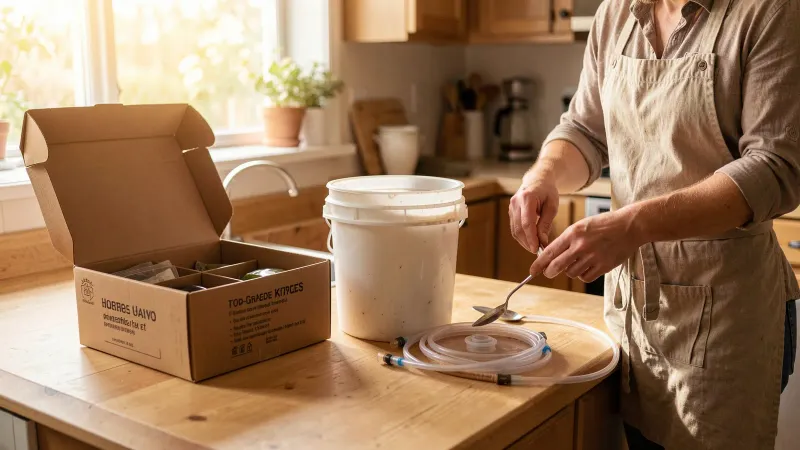
Start with a short list and add only what a specific recipe or kit requires. You will see shop names such as Fermtech, Better Bottle, and similar labels on racks of plastic and glass. Treat those names as labels. Compare the size, the material, and whether the piece actually fits the others.
| Supply | What it is for | What to check before you buy |
|---|---|---|
| Primary fermenter | The wide vessel where the first, often messier, ferment happens | Food-grade plastic, a volume larger than the batch, a lid that accepts an airlock, marks you can read |
| Carboy or secondary jug | A narrower vessel for settling after the first racking | Glass or PET made for beverage use, a size that matches the finished volume with little leftover headspace after it is filled, a bung that actually fits |
| Airlock and bung | Lets carbon dioxide out and keeps fruit flies out | The bung matches the mouth of the vessel; the airlock is complete, not a loose cap with a missing stem |
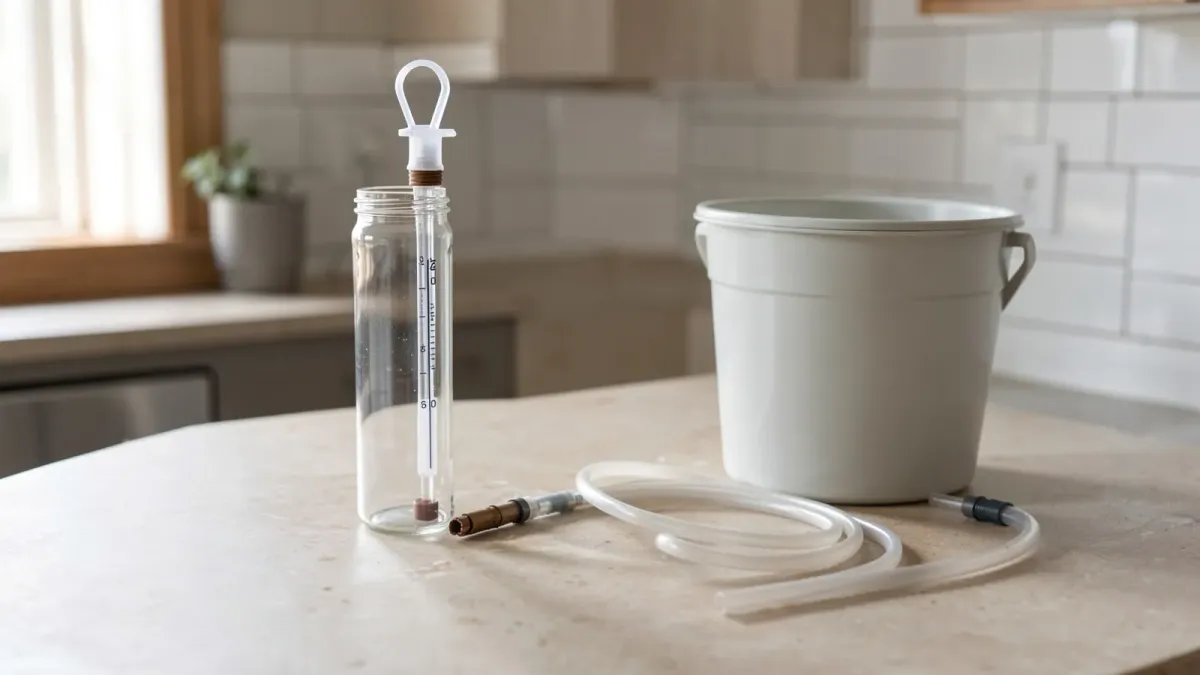
| Hydrometer and trial jar | Tells you whether sugar is still falling | A wine or beer hydrometer with a readable scale, and a jar tall enough to float it |
| Siphon or auto-siphon | Moves wine off the sediment without pouring | Food-grade tubing that reaches from the vessel to the bottle, and a racking tip that stays off the lees |
| Sanitizer | Prepares every surface that will touch juice or wine | A product labeled for beverage equipment; follow the dilution on that label, including any contact time |
| Long spoon or paddle | Mixing juice, water, and additives | Food-grade, long enough to reach the bottom of the fermenter without your hand entering the must |
| Bottles and closures | The storage vessel after the wine is stable | Enough bottles for the full volume, corks or caps that match, and a corker or capper that fits those closures |
| Thermometer | Helps you hold a workable ferment temperature | A range that covers cool cellar and warm kitchen conditions, and a form you can clean |
A bottle brush, a carboy brush, and a notebook are not glamorous, and they prevent more spoiled batches than a decorative oak barrel. Write down starting gravity, dates, and anything you added. Memory is a poor cellar book.
Myths that empty a wallet without improving the wine
Myth one: you need a wooden barrel to make "real" wine. Barrels need volume, sanitation skill, and a place they can sit wet and cool. Oak chips or cubes, used only when a recipe or kit calls for them, are a more honest starting point.
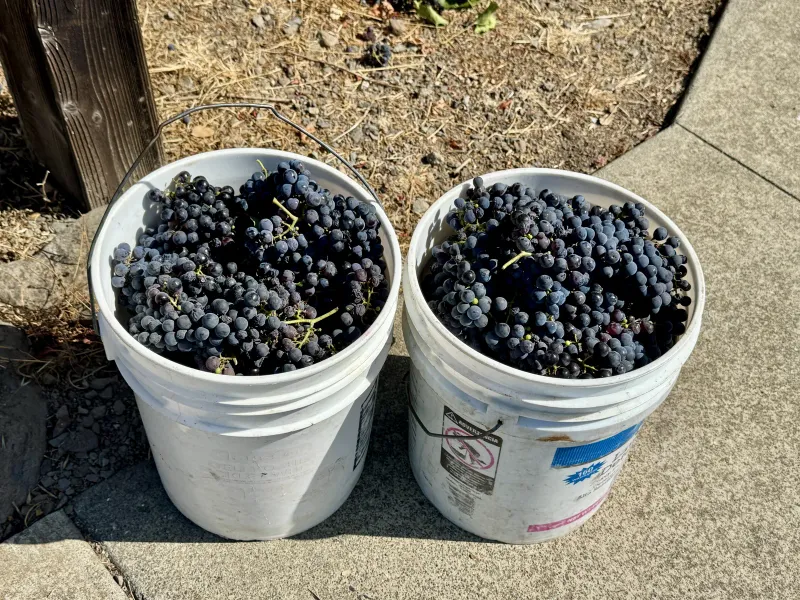
Myth two: any clean-looking plastic bucket is fine. Housewares buckets and leftover paint pails are the wrong material and the wrong history. Buy a vessel sold as food-grade for fermentation, and keep it only for that work.
Myth three: a refractometer can replace a hydrometer on day one and you can skip the trial jar. A refractometer is useful in some hands, but it is easy to misread once alcohol is present, and it does not remove the need to understand gravity. For a first home batch, a floating hydrometer and a tall jar are the clearer tool.
Myth four: more airlocks, more additives, and a second stainless pot will make the process safer. Safety and cleanliness come from following a sanitizer label, rinsing detergent completely if you use it, and not improvising chemical doses. Extra gear that you cannot clean is a liability.
A buyer's checklist for home wine making supplies
Take this list to the shop, or keep it next to the online cart before you click.
- The primary fermenter is food-grade and larger than the batch you plan to make
- The secondary vessel matches the finished volume closely enough that you will not leave a wide air space after filling
- The bung, lid, and airlock actually fit each other and the vessels you are buying
- You have a hydrometer and a trial jar, not only a hopeful look at the airlock
- You have a siphon and enough food-grade tubing to reach your bottles
- You have a sanitizer meant for beverage equipment, and you will follow its label
- You have bottles, closures, and the tool that applies those closures
- You have a thermometer and a long mixing spoon you can clean
- Nothing on the list is a random kitchen tub, a used food bucket of unknown plastic, or a decorative barrel you cannot sanitize
- You still have space to store filled bottles out of heat and direct sun
If a bundle looks cheaper but fails three of these lines, it is not cheaper. You will be back for the missing pieces, or you will start a batch without them.
How the pieces work together in a small kitchen
Think in a short path, not in a catalog. Juice or kit concentrate goes into a sanitized primary fermenter, with headspace for foam. Once the first ferment has calmed, you siphon the wine into a sanitized carboy, leaving the sediment behind. The airlock stays on. When gravity is stable and the wine has cleared enough to bottle, you siphon again into sanitized bottles and close them.
That path is why sizes have to match. A six-gallon kit in a five-gallon bucket is a spill. A three-gallon wine in a six-gallon carboy leaves a wide surface of air, which is a poor idea once fermentation has finished producing carbon dioxide. A siphon that is too short turns a careful racking into a messy pour.
Keep detergent and sanitizer distinct. Wash to remove residue, rinse, then sanitize as the product directs. A scented dish soap that lingers in a hose can flavor a whole batch. Give hoses and brushes time to dry so they are not stored wet and sour.
Rules that sit beside the shopping list
Supplies do not change the legal category of homemade wine. Under federal rules administered by the Alcohol and Tobacco Tax and Trade Bureau, an adult may produce wine for personal or family use, and not for sale, without paying federal excise tax, up to a household cap of 100 gallons per calendar year if one adult lives in the household, or 200 gallons if two or more adults live there. For this rule, an adult is 18 or older, unless a stricter local age for buying wine applies.
The wine may be removed for personal or family use, including a contest or tasting, and it may not be sold or offered for sale. State and local law can be stricter. The official text is in 27 CFR 24.75, with further explanation in the bureau's Wine FAQs.
Buy bottles for your own cellar, not for a market stall. A nice corker is still a household tool.
Questions to settle before you fill the cart
Do I need every home wine making supply in a shop's "deluxe" bundle?
No. If the bundle includes a barrel, a fruit press, and three extra carboys, ask whether you have a recipe that needs them this year. A core set that fits one batch is a better first purchase than a bundle you cannot store or clean.
Is glass always better than plastic for a carboy?
Glass is hard, clear, and easy to inspect, and it is also heavy and breakable. PET carboys made for beverage use are lighter and less likely to shatter in a small kitchen. Either can make good wine if it is food-grade, sized correctly, and kept clean. The weak choice is an unknown plastic jug that once held something else.
Can I reuse commercial wine bottles?
Yes, if you can clean them thoroughly, inspect them for chips, and pair them with a closure you can apply properly. Peel old labels if you want to, but cleanliness matters more than a pretty bottle. Do not reuse a cracked neck or a bottle you cannot sanitize to the base.
What supply is most often missing from a first-time shopping trip?
A hydrometer, or a sanitizer with a clear label dose. People remember the bucket and forget the two tools that tell them whether the wine is done and whether the equipment is actually prepared. Put both on the list before anything decorative.